
Hardtail vs Tremolo bridge — which should you choose?
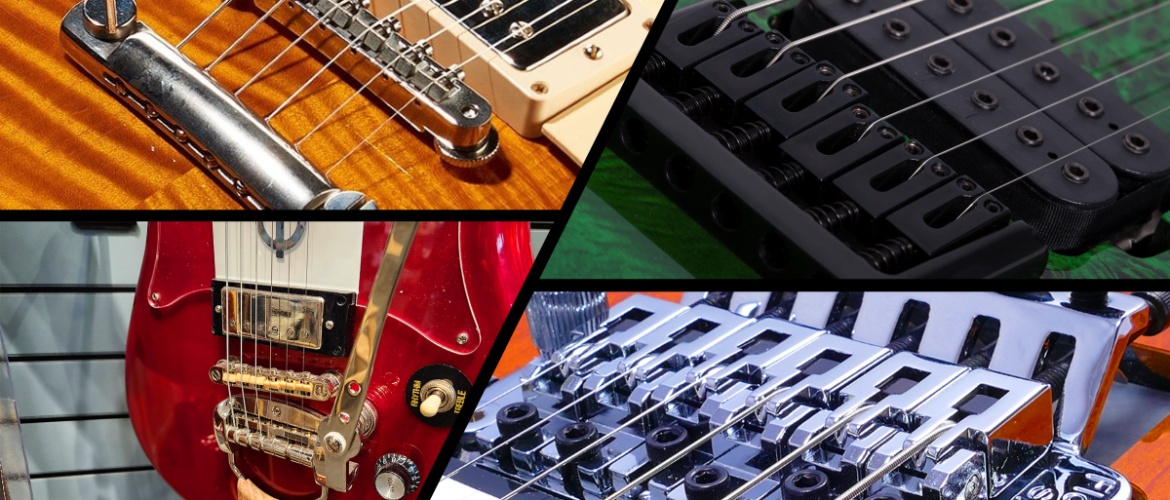
Choosing the right hardware for your electric guitar is a big deal. It affects how you play and sound. Whether you’re new or experienced, knowing the Hardtail vs. tremolo bridge debate is key to finding your sound.
What you choose impacts your guitar’s tuning, sustain, and how it feels to play. Some like the solid feel of a hardtail bridge. Others want the pitch-shifting of a tremolo system.
A whammy bar adds vibrato effects, shaping many musical styles. But, it can make string changes and upkeep harder. We’ll look at how these designs meet your performance needs. This will help you pick the best one for you.
Understanding the Mechanics of a Hardtail Bridge
The hardtail guitar bridge is known for its simple design. It doesn’t use springs or pivots. Instead, it attaches your strings directly to the guitar’s body.
This setup gives you a solid base that many players love. It’s reliable and dependable.
Fixed Bridge Design Principles
The hardtail bridge is simple compared to others. Strings go through the body or are loaded into a fixed plate. This plate is bolted to the wood.
Since it has no moving parts, the bridge stays still. This means the strings’ tension stays the same.
This design also means less chance of parts breaking. You get a stable platform that stays in tune, even when playing hard.
Why Simplicity Leads to Sustain
The hardtail’s simplicity is great for sound lovers. When you play a string, the sound goes straight into the guitar body. This efficient energy transfer helps the sound last longer.
In other bridge types, some sound gets lost. This is because of springs or pivot points. But the hardtail keeps the sound clear and strong. This is what many modern players look for in their sound.
The Anatomy and Function of a Tremolo System
The floating tremolo bridge is a marvel of engineering. It lets players change the pitch of notes live. This makes your guitar incredibly expressive.
How the Whammy Bar Manipulates Pitch
The whammy bar is a lever that moves the bridge. Pushing it down lowers the pitch by reducing string tension. Pulling it up does the opposite, raising the pitch.
This control is key for vibrato and “dive bombs.” The floating tremolo moves more than old designs. You can get subtle shimmers or big pitch changes with a little touch.
The Role of Springs and Tension
A tremolo system balances two forces. The strings pull the bridge toward the neck. Heavy springs pull it back. When balanced, the bridge stays still.
For smooth playing, focus on these tension parts:
- Spring Claw: Sets the springs’ tension.
- Tremolo Block: Holds the strings and springs.
- Knife Edges: Let the bridge pivot smoothly.
The table below shows how adjustments affect the bridge:
| Adjustment | Effect on Tension | Pitch Result |
|---|---|---|
| Tightening Springs | Increases pull | Raises neutral pitch |
| Loosening Springs | Decreases pull | Lowers neutral pitch |
| Adding Springs | Increases stability | Reduces bridge travel |
Getting the tension right is crucial. If not, the tremolo system won’t return to pitch. Correct calibration makes your whammy bar movements precise and musical.
Tuning Stability and Maintenance Considerations
Choosing the right hardware for your guitar is key. It affects how much time you spend playing versus adjusting your strings. Knowing the mechanical differences between systems is crucial for a smooth experience.
Why Hardtails Are the Gold Standard for Tuning
Hardtail bridges are the top choice for those who value string stability most. They are bolted to the body, so there are no parts to move. This fixed setup keeps the tension steady, which is important for keeping the pitch right during long performances.
Many players pick hardtails for drop tunings or complex chords. These bridges need little upkeep over time. Since they don’t move, you won’t have to worry about adjusting spring tension or balance issues.
Managing Friction Points in Tremolo Units
If you like a floating tremolo bridge, you need to handle friction. Any spot where the string meets metal can cause tuning issues. This is a common problem with traditional bridge for stratocaster designs.
To keep your guitar in tune, oil these contact points with graphite or special lubricants. Also, remember that floating systems adjust with string tension changes. So, bending one string can affect the others, needing a gentle touch during play.
| Feature | Hardtail Bridge | Floating Tremolo |
|---|---|---|
| Tuning Stability | Excellent | Moderate |
| Maintenance Needs | Low | High |
| String Bending | Standard | Requires Compensation |
| Setup Complexity | Simple | Advanced |
The Impact of Bridge Choice on Sustain and Tone
Knowing how guitar bridges affect your sound is key for any serious musician. The bridge is where vibrations from the strings meet the body, shaping your guitar’s sound. By looking at these differences, you can pick the right setup for your sound.
Energy Transfer from Strings to Body
The bridge’s mass and material greatly affect how vibrations travel. Solid block saddles offer a straighter path for these vibrations than lighter saddles. This means your guitar’s body can vibrate more freely.
More mass at the bridge means a tighter bass and better sustain. This mass helps turn more of the string’s vibration into sound. Changing your hardware can change how your notes sound.
How Tremolo Springs Affect Resonance
Fixed bridges connect directly, but tremolo systems add new factors. The springs in the guitar’s back cavity filter your tone. They can also dampen the wood’s natural resonance, changing how notes decay.
The springs’ tension affects your guitar’s feel and sound. Proper spring tension keeps the bridge stable while letting the body vibrate. Too tight springs can cut off sustain, while the right tension keeps the guitar’s natural sound. Check out this great blog article Do Tremolo Springs Really Make a Difference.
| Bridge Feature | Hardtail Impact | Tremolo Impact |
|---|---|---|
| Sustain Level | High and consistent | Moderate to high |
| Resonance | Direct body vibration | Spring-dampened response |
| Tone Profile | Bright and punchy | Warm and expressive |
| Energy Transfer | Maximum efficiency | Variable via springs |
Playing Styles and the Creative Use of the Whammy Bar
Learning to use the whammy bar opens up a world of sound for guitarists. It’s more than just a tool; it’s a way to express emotions. By adjusting string tension, you can mimic the human voice’s subtleties.
Expressive Techniques for Lead Guitarists
Lead guitarists use the whammy bar to add depth to their solos. A little vibrato can make notes feel alive. Aggressive pitch-shifting adds drama.
Practicing small, controlled movements is key. This helps achieve consistent results. With time, these skills become second nature, letting you focus on your music.
When a Fixed Bridge Limits Your Performance
Fixed bridges are great for tuning stability but limit creativity. If you need surf-rock shimmers or heavy metal dives, a fixed bridge won’t do. You can’t get the same pitch-bending as with a whammy bar.
Choosing the right bridge depends on your musical goals. For technical precision, a fixed bridge is good. But for dynamic movement and textures, a tremolo-equipped guitar is better.
| Technique | Effect on Sound | Difficulty Level |
|---|---|---|
| Subtle Vibrato | Adds warmth and sustain | Beginner |
| Pitch Dips | Creates a “crying” tone | Intermediate |
| Dive Bombs | Extreme pitch drop | Advanced |
| Flutter | Rapid pitch oscillation | Expert |
Comparing Popular Tremolo Systems
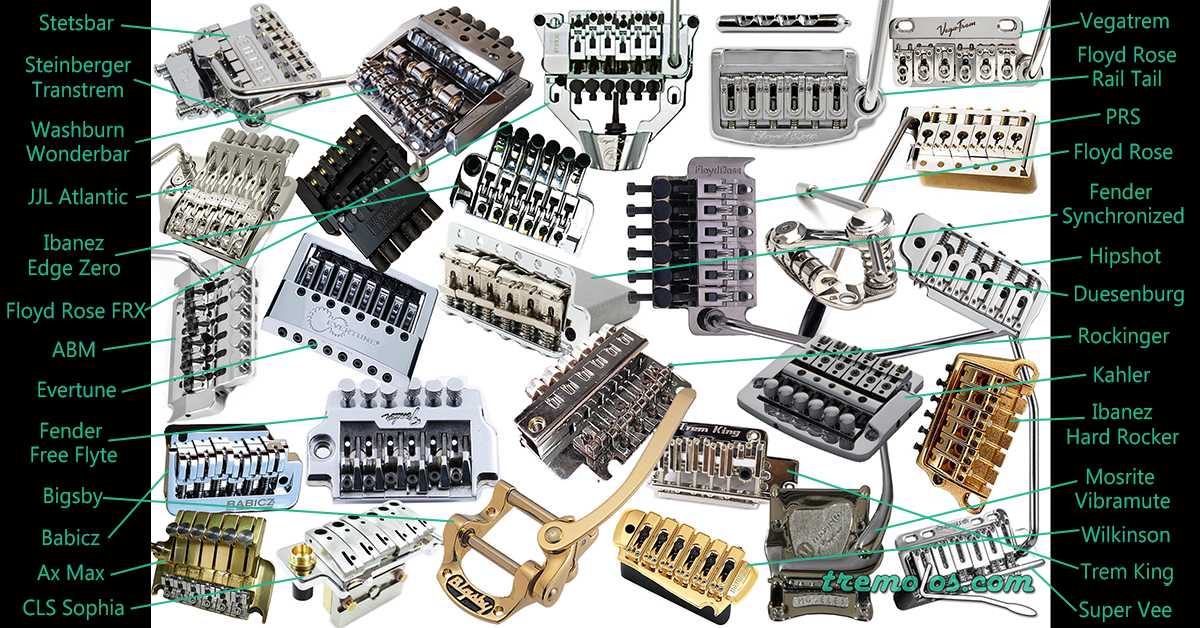
Choosing the best tremolo system depends on whether you want classic feel or modern stability. Some players love the subtle vibrato of old designs. Others need the solid performance of a locking trem system. Knowing these differences helps you pick the right gear for your music.
The Vintage Synchronized Tremolo
The vintage synchronized design is a classic in the guitar world. It’s known for its smooth, musical feel. It uses a simple pivot point and springs to return the bridge to its neutral spot.
This tremolo system gives a natural, organic feel. Many blues and rock players like it for its light vibrato. But, it lacks a locking mechanism, which can make tuning unstable during aggressive playing.
If you do deep dives or heavy flutter effects, the strings might not return perfectly to pitch. It’s still a top choice for those who prefer simplicity and traditional looks over extreme pitch range.
The Floyd Rose Locking Tremolo
The floyd rose tremolo is the top choice for extreme pitch manipulation. It has a locking nut and bridge, which clamp the strings in place. This locking trem system lets you do wild dive bombs and flutter effects without losing tuning.
It offers unmatched stability but has a steeper learning curve for string changes and setup. Many see it as the best tremolo system for high-gain, technical playing. If you go with a floyd rose tremolo, be ready to spend extra time setting it up right.
| Feature | Vintage Synchronized | Floyd Rose Locking |
|---|---|---|
| Tuning Stability | Moderate | Excellent |
| Pitch Range | Subtle | Extreme |
| Setup Difficulty | Low | High |
| String Changes | Fast | Time-Consuming |
The Case for the Hardtail Bridge in Modern Rock
Modern rock guitarists often find that the simplest gear provides the most reliable results on stage. When you are performing under hot lights or playing aggressive sets, you need equipment that does not fight back. A hardtail bridge is the perfect solution for players who prioritize consistency and raw power over complex pitch manipulation.
Reliability for Drop Tunings and Heavy Riffs
Heavy music often requires players to experiment with drop tunings to achieve a thicker, more menacing sound. A hardtail bridge is fixed directly to the guitar body, so it does not shift when you change string tension. This design ensures that your string stability remains rock-solid even during the most intense, percussive riffing.
You will notice that your guitar stays in tune much longer when there are no moving parts to compensate for tension changes. This reliability allows you to focus entirely on your performance rather than worrying about your tuning drifting mid-song. It is a favorite choice for studio recording where precision is absolutely vital.
Ease of String Changes and Setup
Beyond performance, the maintenance of a fixed bridge is significantly more straightforward than other systems. Changing strings is a quick process because you do not have to balance spring tension or adjust counterweights. This efficiency is a massive advantage for touring musicians who need to perform quick repairs between songs.
Setting up your instrument also becomes a much less daunting task for the average player. You can adjust your action and intonation with confidence, knowing that the bridge will not move unexpectedly. The following table highlights why many players choose this setup for their daily workhorse guitars.
| Feature | Hardtail Bridge | Tremolo System |
|---|---|---|
| String Changes | Fast and Simple | Time-Consuming |
| Tuning Stability | Excellent | Variable |
| Setup Complexity | Low | High |
| Drop Tuning | Highly Recommended | Difficult |
Evaluating Your Personal Playing Needs
Choosing the right hardware for your guitar begins with knowing yourself. Every player has unique goals. The bridge you pick will either help or hinder your progress. By understanding your needs, your guitar will feel like a part of you.
Assessing Your Genre and Performance Requirements
Different guitar bridge types suit various music styles. For heavy rhythms, a fixed bridge is best. It keeps your strings stable during intense playing.
If you need to adjust pitch, an adjustable bridge might be better. Think about the vibrato effects your music needs. Choosing the right hardware ensures it supports your playing style.
Considering Your Skill Level and Setup Patience
Your skill level affects how much you want to tinker with your guitar. An adjustable bridge guitar is versatile but requires knowledge. If you prefer playing over setup, a simpler bridge might be better.
Beginners often find fixed bridges easier. They make changing strings simpler. As you get better, you might enjoy more complex setups. The table below can help you choose based on your current level.
| Player Profile | Preferred Bridge | Key Benefit |
|---|---|---|
| Rhythm-Focused | Fixed/Hardtail | Maximum Tuning Stability |
| Lead/Expressive | Tremolo System | Pitch Manipulation |
| Studio/Session | Adjustable/Hybrid | Precise Intonation |
| Beginner/Casual | Fixed/Hardtail | Low Maintenance |
Common Myths About Bridge Types Debunked
Many people have wrong ideas about guitar bridge types. Some avoid certain parts because of old information. Also, “tremolo” actually means vibrato, not volume changes.
Do Tremolos Always Go Out of Tune?
Some think moving bridges always mess up tuning. But, modern locking tremolo systems are very stable. They keep the strings tight at both ends, so your tuning stays perfect.
The Floyd Rose tremolo shows how new tech fixes old problems. It lets you change pitch a lot without losing tuning. Today, these systems are easier to find and keep up than ever.
Are Hardtails Only for Beginners?
Many think fixed bridges are just for beginners. But, many pros love hardtail bridges for their simplicity and sound. They connect strings straight to the body, which is great for keeping sound going.
Hardtails are popular in many music styles. They’re easy to care for and keep a consistent sound. If you want a reliable sound without hassle, a hardtail is a good choice.
| Feature | Hardtail Bridge | Tremolo System |
|---|---|---|
| Tuning Stability | Excellent | Variable (High with locking) |
| Setup Difficulty | Low | High |
| Pitch Control | None | Full Vibrato |
Hybrid Solutions and Bridge Alternatives
You don’t have to pick between flexibility and stability anymore. Modern tools offer smart hybrid solutions. Many players want the feel of a floating tremolo but also need a stable tuning. Luckily, there are now many upgrades to improve your guitar’s performance.
The Floyd Rose Rail Tail Explained
The Rail Tail Tremolo is a precision-machined, dive-only tremolo that retrofits any standard 6-point Strat®-style bridge with zero modifications, blending hardtail reliability with tremolo flexibility. Its core innovation is a rotating plate that rides a precision rail mounted to the body, improving tuning stability and allowing open strings to hold pitch while bending others. Combined with adjustable string block positioning, roller saddles, and tapered string holes, the system delivers up to 15° more dive range than conventional bridges, along with superior sustain and tone transfer — all in an easy DIY install.
Tremolo Blockers and Stabilizers
If you have a floating tremolo guitar, you can make it better without a full upgrade. A tremolo stabilizer or blocker stops the bridge from moving by accident. It still lets you lower the pitch. These are great for those who want to improve a standard bridge for stratocaster.
For instance, Tonevise stabilizers can make a Stratocaster’s bridge much more stable. They bridge the gap between a basic setup and a complex locking trem system. Think about these main benefits when you’re deciding to modify:
- Enhanced Tuning Stability: Stops the bridge from moving when strings break or you palm mute heavily.
- Improved Sustain: A stiffer connection between the bridge and body boosts resonance.
- Ease of Setup: Makes string changes quicker and less likely to cause balance problems.
- Reversibility: Most stabilizers can be taken off if you want to go back to a fully floating setup later.
Conclusion
Choosing the right hardware is key to finding your unique sound as a musician. The Hardtail vs. tremolo bridge debate is about how you play your instrument. It’s about how you connect with it every time you play.
Hardtail bridges are great for those who need solid tuning stability. They’re perfect for players who love heavy riffs and precise playing. These fixed bridges connect your strings directly to your guitar’s body.
Tremolo systems let you play with pitch and vibrato. Brands like Floyd Rose and Ibanez are always improving these bridges. They offer a world of creative possibilities.
Whether you prefer a fixed bridge for reliability or a whammy bar for freedom, it’s up to you. Knowing the differences between Hardtail and tremolo bridges helps you choose the right gear.
Think about how you play and what you want to achieve in music. Share your favorite bridge type with other guitarists. Your sound starts with the hardware you pick today.