
Your
Ultimate Guide to
Tremolos
Welcome to
Tremolos.com
Your ultimate online destination for everything related to tremolos, vibrato bars, or as many guitarists like to call them, whammy bars. Whether you’re a seasoned guitarist, a dedicated enthusiast, or a complete beginner exploring the expansive world of guitar accessories, Tremolos.com is here to be your go-to resource.
Dive deep into our extensive library (coming soon), where you’ll find a comprehensive collection of resources to help you make the best decision when choosing your next tremolo system. Here, you can compare different brands, styles, prices, and customer reviews, allowing you to make an informed choice based on your specific needs and preferences. Our content includes a variety of tremolo systems and guitar bridge models, each with their own unique characteristics designed to suit different playing styles and genres.

To clarify the difference between tremolo and vibrato...
tremolo [trem-uh-loh] A wavering effect in a musical tone, typically produced by slight and rapid changes in the volume (amplitude) of a note.
vibrato [vih-brah-to] A rapidly repeated slight change in the pitch (frequency) of a musical note.
While we acknowledge that the correct term for this device is “vibrato,” the misnomer coined in the 1950s by pioneer Leo Fender has developed a distinct identity of its own over time!
Explore A Tale on Tailpieces for a deeper dive into the history of the tremolo.
Popular Articles
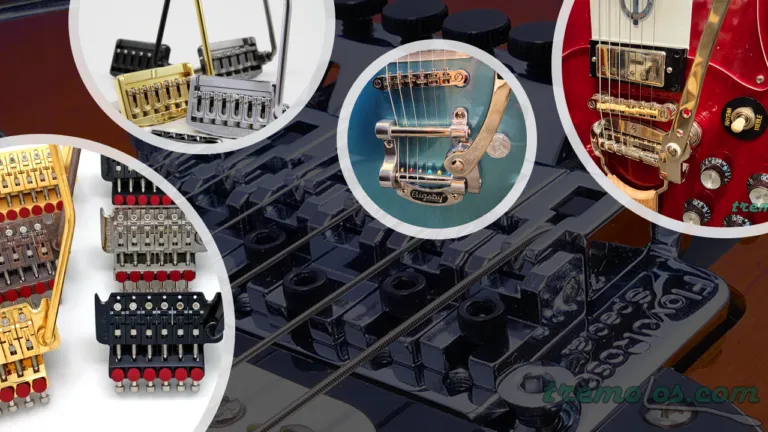
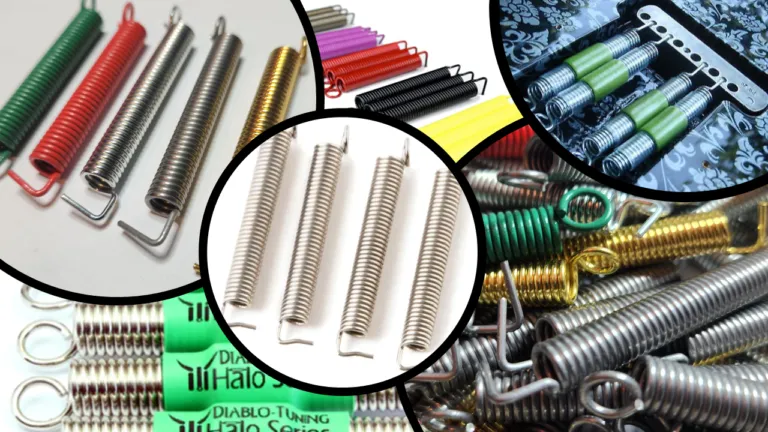
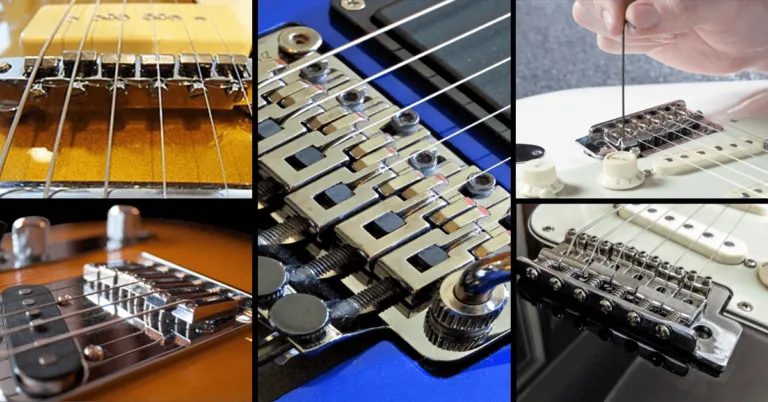


Guitar Tremolos
A Rich History of Innovation and Evolution
Few pieces of guitar hardware have influenced playing style and instrument design as much as the guitar tremolo. From early vibrato systems built for subtle pitch movement to modern double-locking bridges capable of extreme dive bombs and pull-ups, tremolos have continually evolved alongside the music itself.
Manufacturers such as Fender, Bigsby, Floyd Rose, Kahler, Wilkinson, Hipshot, Gotoh, Ibanez, Schaller, and others have each introduced new ways to improve tuning stability, sustain, comfort, and control. Innovations in pivot systems, locking mechanisms, saddles, springs, sustain blocks, and tremolo arms have transformed a simple pitch-bending device into one of the most important pieces of expressive guitar hardware.
Today, players can choose from a huge range of designs, each with its own feel, strengths, and history. Understanding how these systems developed helps explain why the guitar tremolo remains such an important part of electric guitar design.
The Origins of the Guitar Tremolo
The story of the guitar tremolo can be traced back to the early 20th century. While the basic concept of a pitch-modulating device existed long before, one of the earliest commercially successful designs came in the form of the Kauffman Vibrola, introduced by Doc Kauffman in the 1930s. This early version laid the foundation for future developments, though it wasn’t until the 1950s that the tremolo system gained widespread popularity.
Key Figures and Groundbreaking Innovations
Doc Kauffman
Leo Fender
Floyd Rose
Paul Bigsby
Popular Tremolo Systems
Fender Synchronized Tremolo
Bigsby Vibrato
The Bigsby Vibrato is an enduring classic, known for its subtle, vintage-style pitch modulation. Found primarily on hollow-body guitars like those made by Gretsch, the Bigsby system creates a smooth, shimmering effect that is perfect for genres like rockabilly, blues, and jazz. Its vintage charm and ease of use have made it a favorite among players who prefer a gentle vibrato rather than extreme pitch shifts.
Floyd Rose Locking Tremolo
Kahler Tremolo
Ibanez Edge Tremolo
The Guitarist’s Perspective
Guitarists have always been highly selective about their choice of tremolo system, and opinions can vary dramatically depending on playing style, musical genre, setup preferences, and how aggressively the tremolo arm is used. Some players want only gentle pitch movement and subtle expression, while others expect a bridge to handle deep dive bombs, dramatic pull-ups, and repeated use without throwing the guitar out of tune. Because of this, there is no single tremolo system that is ideal for every guitarist.
Fender tremolos remain among the most recognizable and widely used designs in electric guitar history. Players often appreciate their classic sound, familiar feel, and smooth, organic action. The traditional synchronized tremolo is capable of everything from subtle chord shimmer to more pronounced pitch dips, making it particularly well suited to blues, rock, surf music, funk, and classic pop. Many guitarists also like the simplicity of the Fender design and the fact that it can be set up floating, decked against the body, or even configured for dive-only operation. However, tuning stability can depend heavily on proper setup, nut condition, string trees, springs, and the quality of the bridge components.
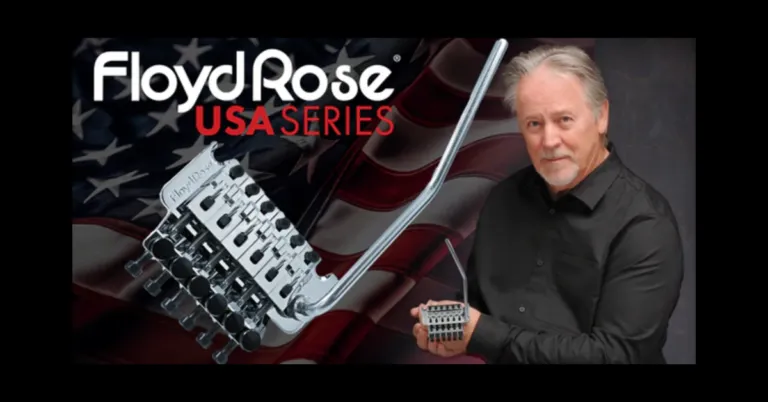
At the opposite end of the spectrum, Floyd Rose tremolos are famous for their ability to withstand aggressive playing. Their double-locking design secures the strings at both the nut and bridge, providing excellent tuning stability even during extreme tremolo use. For this reason, Floyd Rose systems became especially popular with hard rock, shred, and metal guitarists who rely on deep dive bombs, squeals, flutters, and dramatic pitch effects. The trade-off is that string changes, alternate tunings, and setup can be more involved than with a traditional non-locking tremolo.
The Bigsby Vibrato appeals to a very different type of player. Rather than extreme pitch changes, the Bigsby is designed around a subtle, vintage-style vibrato. Its gentle movement can add a warm shimmer to chords and single-note lines without radically changing the pitch. Bigsby systems remain closely associated with rockabilly, country, blues, jazz, and vintage-inspired rock, and many players value them as much for their distinctive appearance as for their musical feel.
Kahler tremolos occupy another unique position. Their cam-based design gives them a noticeably different response from both Fender and Floyd Rose systems. Players often praise Kahler bridges for their versatility, smooth action, and ability to produce both subtle vibrato and more dramatic effects. Individual string height and other adjustments also give players considerable control over setup. This makes the Kahler attractive to guitarists who enjoy experimenting with different techniques and who want a tremolo that feels different from the more common pivot-based designs.
Ultimately, the best tremolo comes down to what the player expects from the guitar. A blues guitarist may prefer the natural feel of a Fender system, a metal player may prioritize the extreme stability of a Floyd Rose, a vintage enthusiast may choose the graceful movement of a Bigsby, and an experimental player may gravitate toward the flexibility of a Kahler. Each design has its own personality, strengths, and compromises—and that variety is a large part of what makes tremolo systems such an interesting part of electric guitar design.